
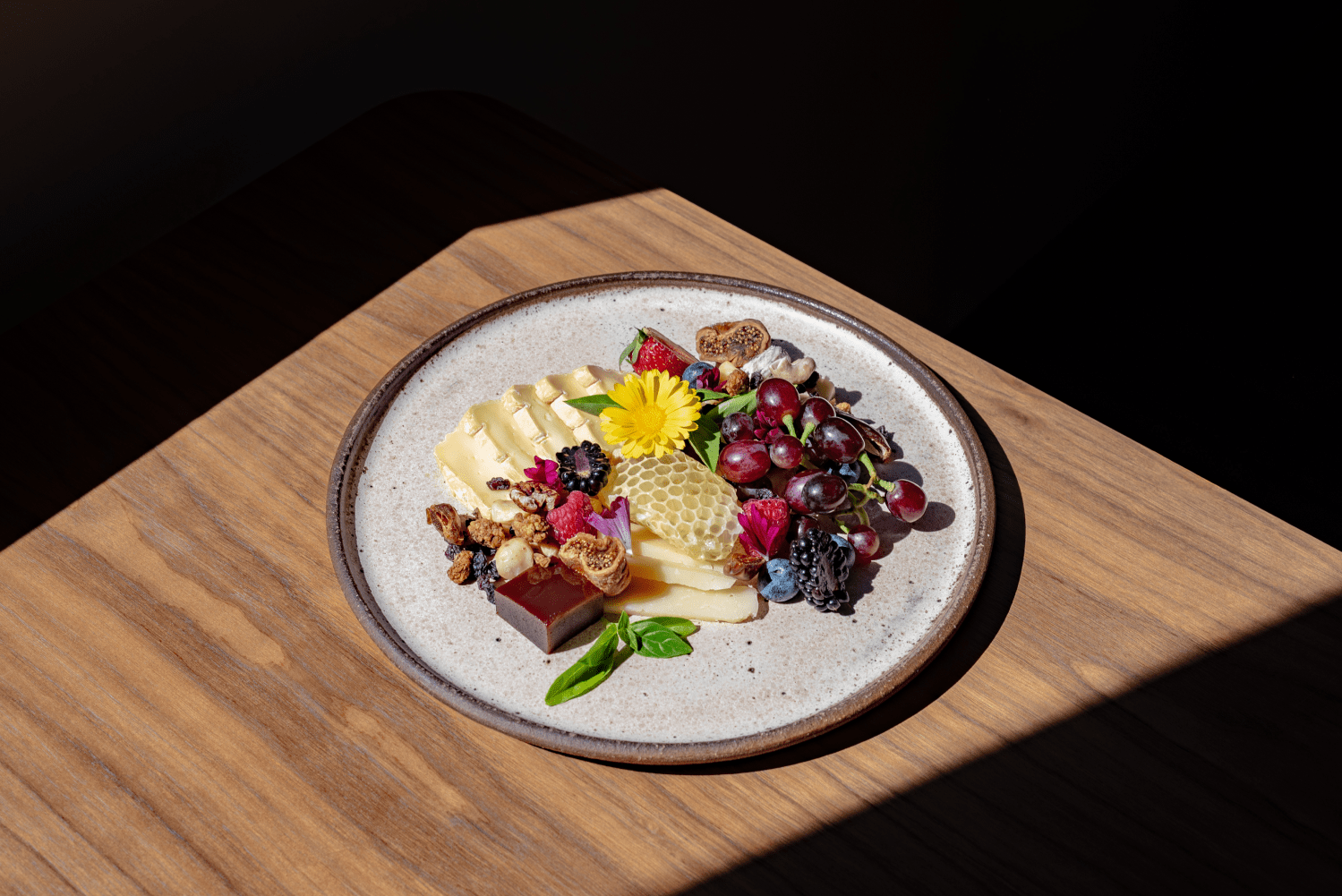

Master the Art of Cheese Pairing
A well-curated cheese platter brings together contrast and harmony. Aim for a mix of textures, flavours, and pairings that invite slow grazing and conversation.
The Cheeses
- Manchego or Cheddar
Firm and savoury, offering nutty, slightly salty notes. Slice or break into chunky pieces. - Triple Cream Cheese
Lush, soft and indulgent. Leave whole or lightly score the top so it feels generous and inviting. - Blue Cheese
Rich, smooth and creamy with a medium level of blueing. A little goes a long way, so serve in a single wedge. - Goat Cheese
Fresh and tangy, adding brightness to the platter. Serve as a log or soft rounds.
Dried Fruits and Pastes
These add sweetness and depth, balancing salt and richness.
- Dried figs or apricots
- Muscatels or sultanas
- Quince paste for Manchego or Cheddar
- Fig paste or pear paste for blue and triple cream
Arrange in small clusters rather than scattering, so each cheese has a natural companion nearby.
Nuts and Crunch
Texture is key. Choose lightly seasoned or natural nuts.
- Marcona or roasted almonds
- Walnuts for blue cheese
- Pistachios for a pop of colour and sweetness
- Seeded crackers or crispbread alongside plain wafers (see herb cracker recipe below)
Fresh Elements
These lift the platter and keep it feeling fresh.
- Sliced pear or apple
- Red or green grapes
- A few sprigs of fresh herbs like rosemary or thyme for aroma
Drinks Pairings
Wine
- Manchego or Cheddar: Tempranillo, Shiraz, or a dry cider
- Triple cream: Chardonnay or sparkling wine
- Blue cheese: Sweet dessert wine or fortified wine
- Goat cheese: Sauvignon Blanc or a light rosé
Another wine that pairs beautifully with all four cheeses is a sparkling wine or Champagne. If you prefer a still option, a crisp Sauvignon Blanc or unoaked Chardonnay works wonderfully. For those who enjoy red, choose a light to medium-bodied wine such as Pinot Noir or Tempranillo, which complements the cheeses without overpowering them.
At Gaia, we also often recommend the Grosset Apiana Fiano, which is great with cheese because it combines bright, refreshing acidity with a textural, slightly nutty palate. The acidity cuts through creamy and rich cheeses, keeping your palate fresh, while the wine’s almond, pear and subtle honeyed notes naturally echo the flavours found in soft, nutty and semi-hard cheeses. It has enough weight to stand up to cheese, but stays clean and dry, making each bite (and sip) feel balanced rather than heavy.
Beer
- Cheddar: Amber ale or pale ale
- Triple cream: Wheat beer
- Blue cheese: Stout or porter
- Goat cheese: Saison or farmhouse ale
Non-Alcoholic
- Sparkling water with citrus peel
- NON2 Caramelised Pear & Kombu
- Apple or pear juice
- Kombucha with ginger or berry notes
- Herbal iced tea, like chamomile or mint
How to Assemble
Start with the cheeses spaced evenly across the board. Build outwards with fruits, pastes, and nuts, keeping colours and textures varied. Leave a little breathing room so nothing feels crowded.
The result should feel abundant but calm, inviting guests to explore, mix, and linger.
Vegan Herb Cracker Recipe
- 240g GF flour
- 100g almond meal
- ½ tsp baking powder
- 30g flaxseed meal
- 1 tbls dried or fresh herb
- 2 tsp salt
- 50ml macadamia oil or olive oil
- 130ml cold water
- Mix all dry ingredients in a bowl.
- Add oil and water to dry mix and knead until smooth dough is formed.
- Divide dough into two and roll out between baking paper to about 2-3mm thick.
- Place on baking tray and bake at 160 degrees for 20-22 minutes or until golden brown.
- Cool on drying rack before serving.
Vegan herb cracker is a health and great alternative to store bought crackers. This cracker can be served with dips or cheese or alternatively, used as a pastry for savoury tarts or quiche. The cracker will keep for up to 5 days in an air tight container.
Enjoy!
Mitch, Dan & the Gaia Culinary Team
